There are many reasons to drill a hole in the ice.
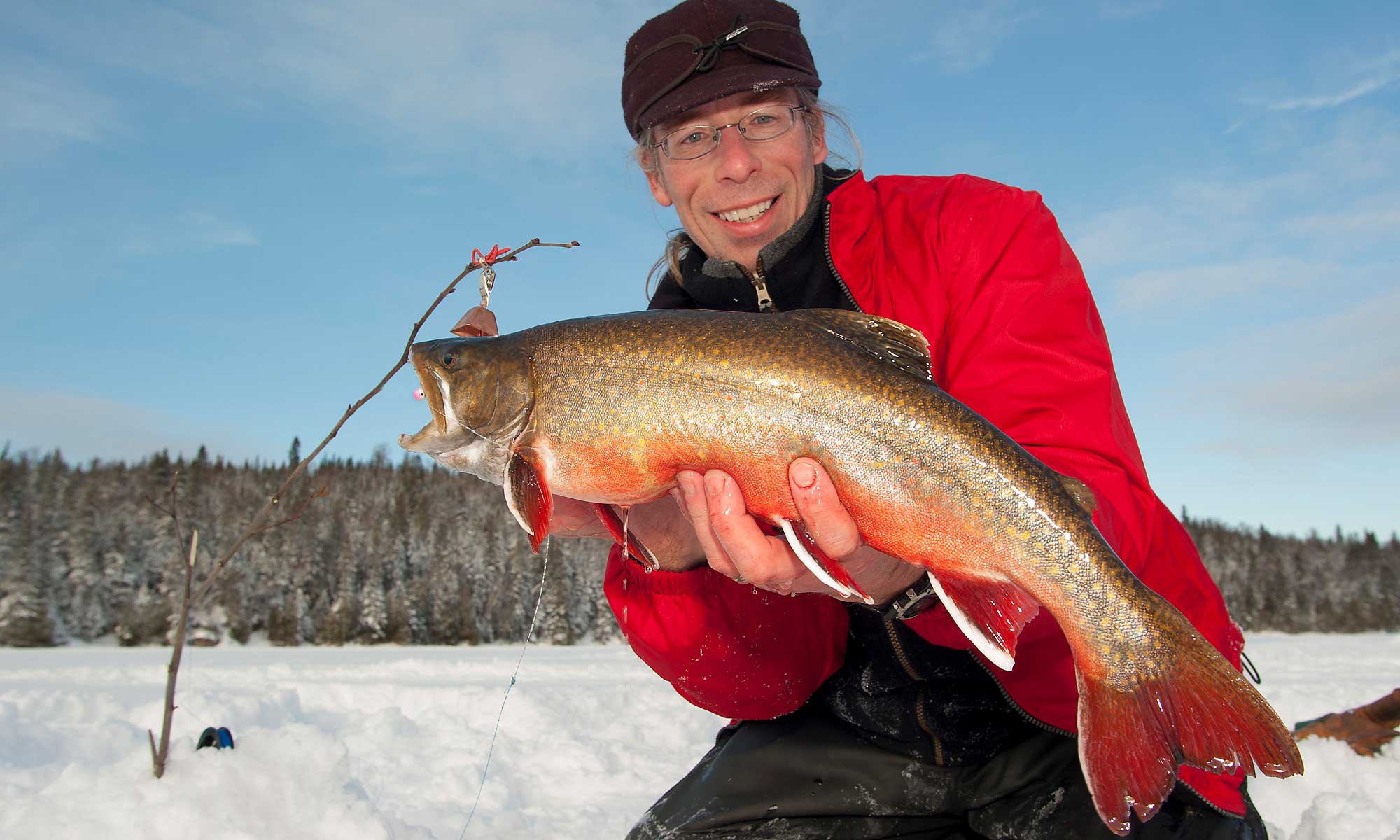
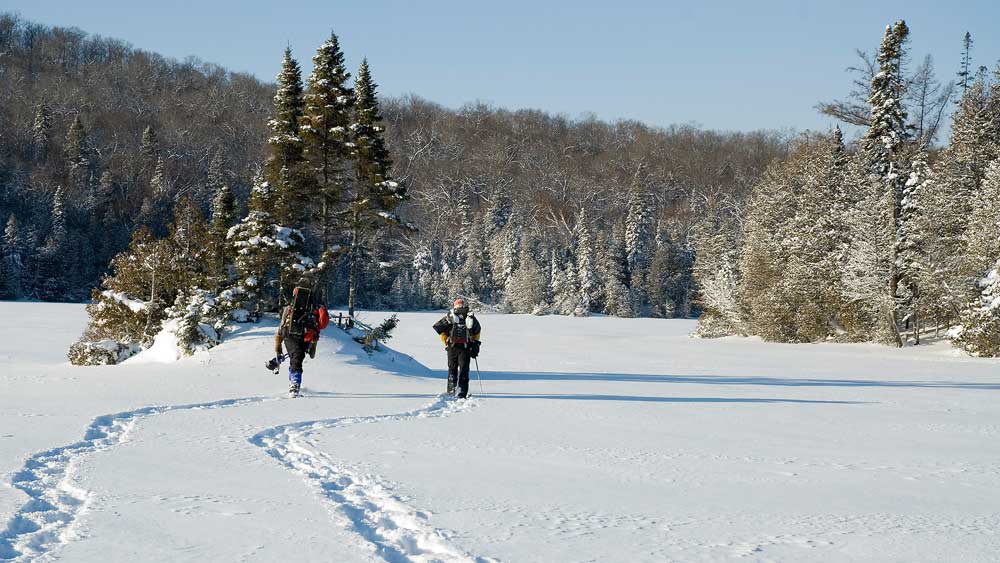
There are many reasons to drill a hole in the ice in Algoma Country. As I stand on a midsized inland lake, where pine and cedar grip a rocky shoreline that plunges steeply through the lake’s icy surface, it’s clear that the dramatic snow-clad landscape is one of them. Other reasons dwell beneath the frozen surface where an aggressively jigged spoon elicits a savage strike. The battle is defined by solid headshakes and a series of brief searing runs, but fortune is on my side as I guide a shapely trout to the surface.
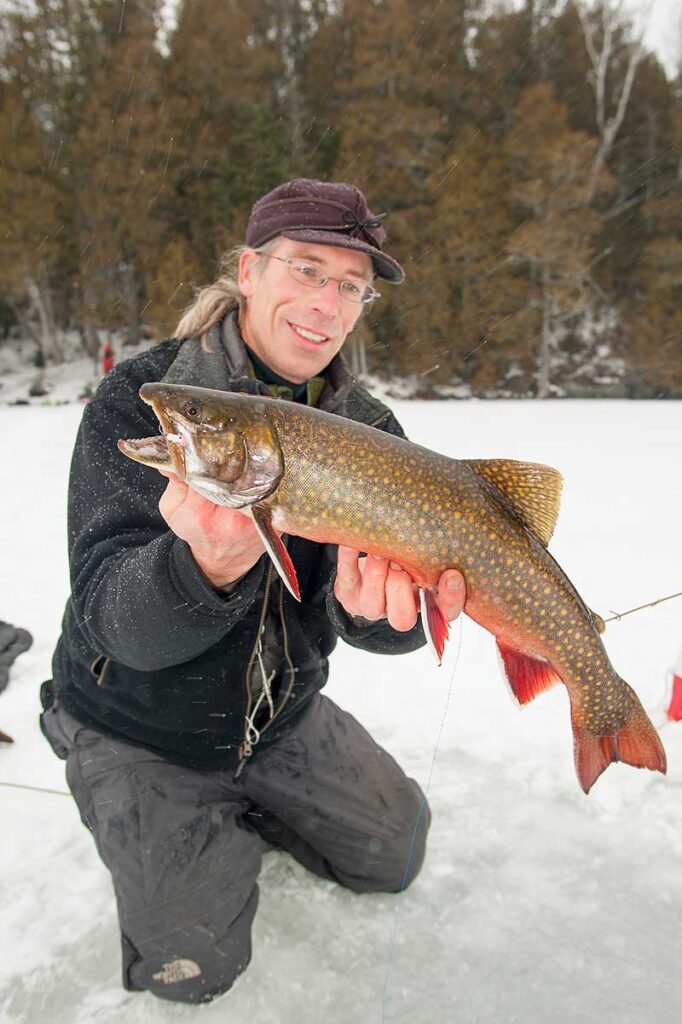
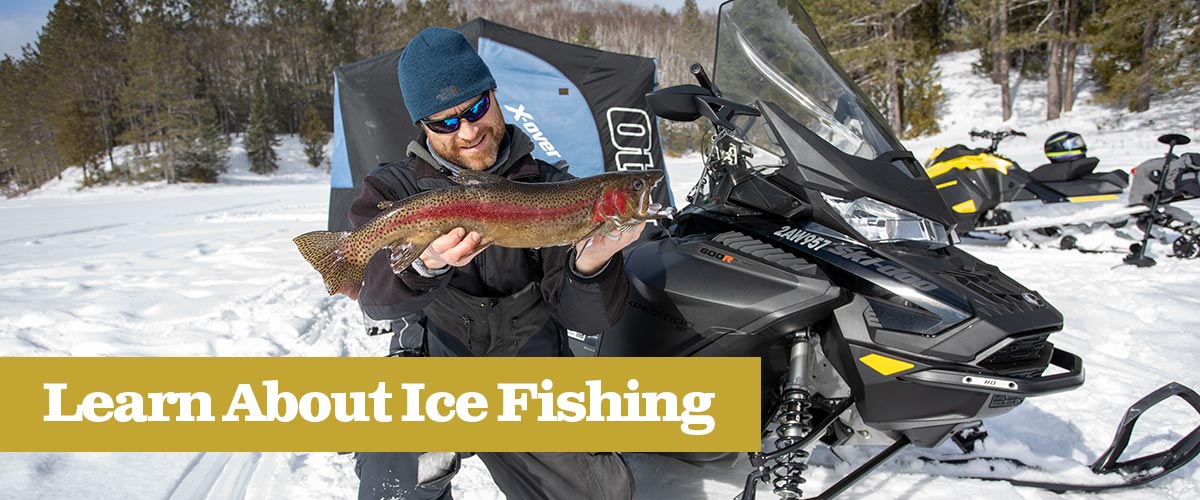
Examination of the specimen reveals pale speckles and a pouting mouth, its shapely form obviously sculpted by the hand that created the brook trout. Her lake trout attributes are hinted at with a shallowly forked tail and her great size. At just over 22 inches, she is about as large as any brook trout would grow in these waters. But as a splake, this fish is just getting started. There are many reasons to drill a hole in the ice; one of the tastiest, most beautiful and most aggressive is the splake trout.
Why Splake?
The splake is a hatchery-reared hybrid resulting from crossing a female lake trout with a male brook trout and combines many of the qualities of its parents, including the brook trout’s fast growth and the lake trout’s large size. Ontario’s splake program began in the 1940s, and widespread stocking began in the 1970s to provide sport fishing opportunities in inland lakes where plantings of other trout had been relatively unsuccessful.
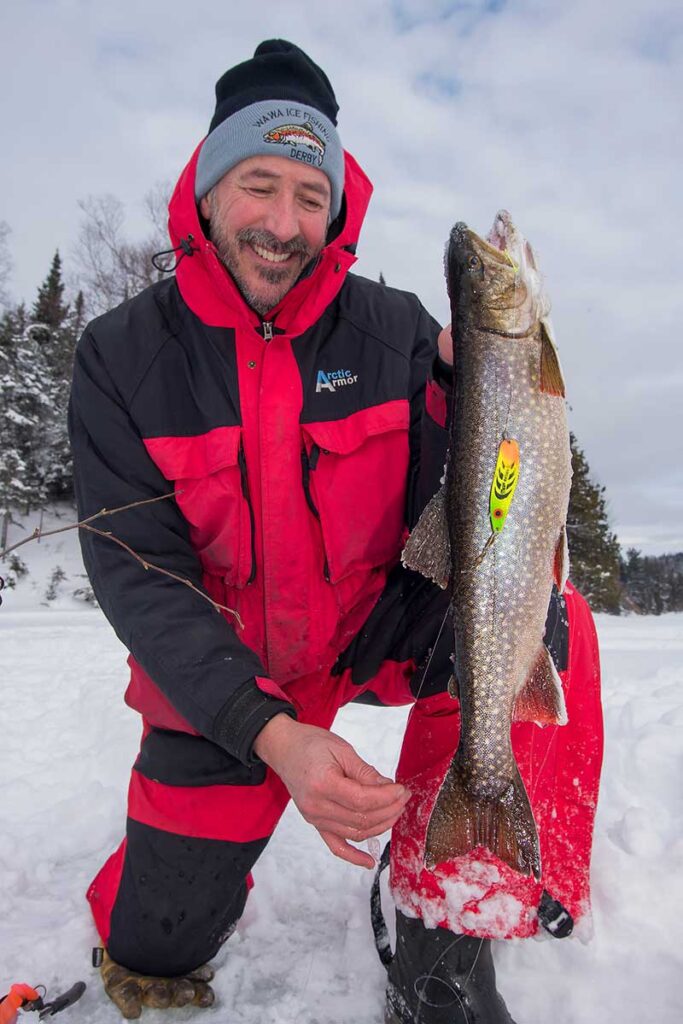
Sadly, many of Ontario’s inland lakes that once held native populations of brook trout have become infested with non-native populations such as perch, which out-compete brook trout for food. With a more rapid growth rate than either parent, not only can splake survive in the face of perch, but they can thrive to provide tremendous ice fishing opportunities in former brook trout lakes. In Ontario, roughly a half million splake are planted in more than 200 lakes every year, many in Algoma Country.
Catching Them
Look for splake waters on the Fish On-Line website. Most splake lakes are open year-round, so we have the option to fish as soon as the ice is safe. Early winter tends to hold the most promise but splake feeds aggressively throughout winter. Traditionally, I’ve felt that splake tends to favour the shallows of the brook trout over the depths usually associated with lake trout. However, in recent years, I’ve had success in depths down to 30 feet, so it makes sense to cover a wide range. Start sinking holes over water anywhere from six feet down to 25 feet or more. Choose an area of relatively shallow water adjacent to deeper water. Shoreline edges, shoals, extensions of points, beaver houses and estuaries of inflows are all good starting points, especially when situated near the escape habitat of deep water.
Bait, Lures and Setup
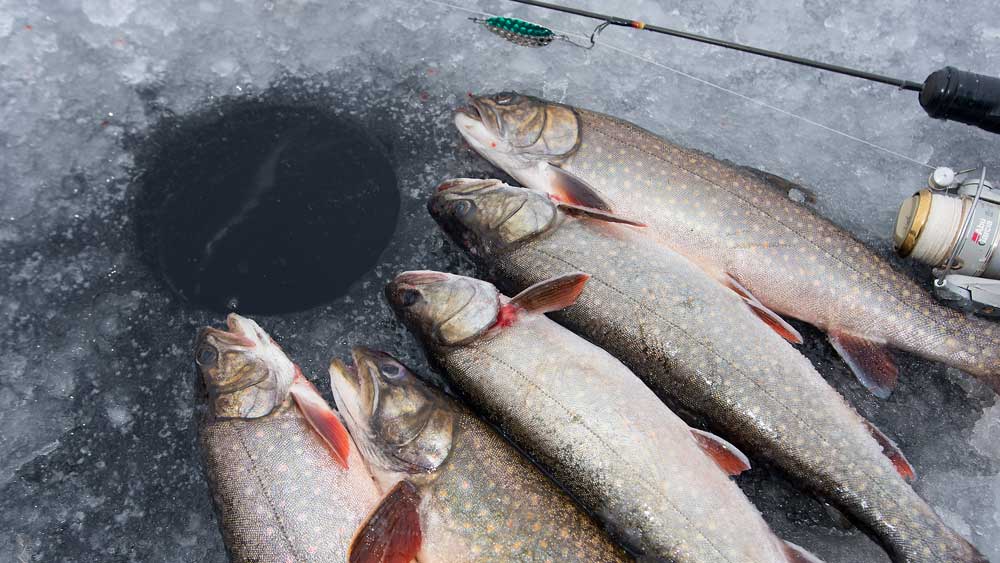
Where allowed, a set line with a live minnow is a prudent choice. A 2- to 4-inch sucker, dace or shiner minnow hooked behind the dorsal fin and suspended just off the bottom with a single hook and split shot or 1/8 oz green, white or red leadhead jig is a productive setup. Worms and leeches are also solid bets.
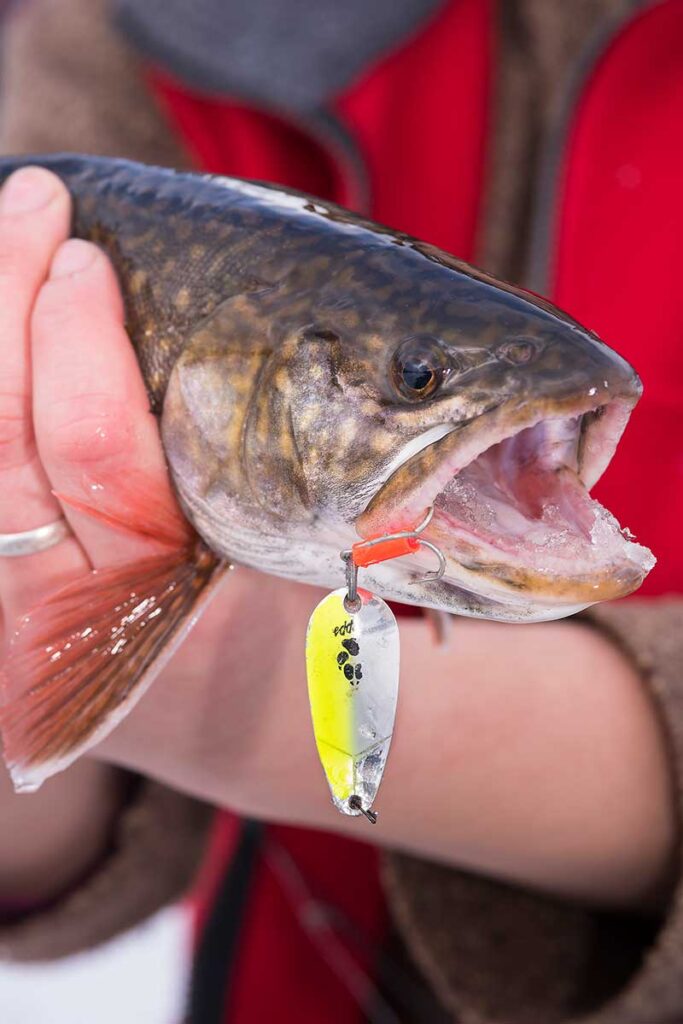
With my second line, I like to jig. Choose a jigging rod with enough backbone to present ¼ oz to 1/3 oz spoons. Like brook trout, splake appreciates the erratic flashy action of brightly coloured – silver/blue, gold/red, and yellow/red lures like the Mepps Little Wolf or Williams Nipigon. Splake also favour the controlled falling action of a white, green or orange bucktail, tube and airplane jigs.
I try to time it so my live bait and jigging presentations are moved from shallow through to deep water in the space of a few hours. If we haven’t found fish by then, it’s time to try a different area. With the hard-hitting aggression of the speckled trout and the dogged determination of the laker, if we get our offering in front of them, it usually means action.
Fishing Regulation
Widespread throughout the province with a year-round open season and a generous limit of five on a regular licence, splake provides tremendous angling opportunities and plays a vital role in taking some of the pressure off native brook trout and lake trout populations.
Once we’ve tangled with a few of these hybrids, the allure of splake fishing will hit us like a slap in the face with a slightly forked tail. With more and more pressure put on our native fisheries, splake is nothing but good for the fish and anglers of Algoma.
Tags
About the Author

Professional photographer and writer James Smedley’s contributions - more than 400 written pieces and close to 1,000 images - to U.S. and Canadian books, magazines and newspapers have earned him over 40 National and International awards. In addition to teaching photography workshops, James is Travel Editor at Ontario OUT OF DOORS Magazine. James has fly fished for brook trout and arctic grayling in far northern rivers and continues to cast for trout, bass and steelhead near his home in the northern Ontario town of Wawa where he lives with his wife Francine and daughters Islay and Lillian.